


From All-Star Chef to Running His Own Food Truck. Meet Johnny Zone!
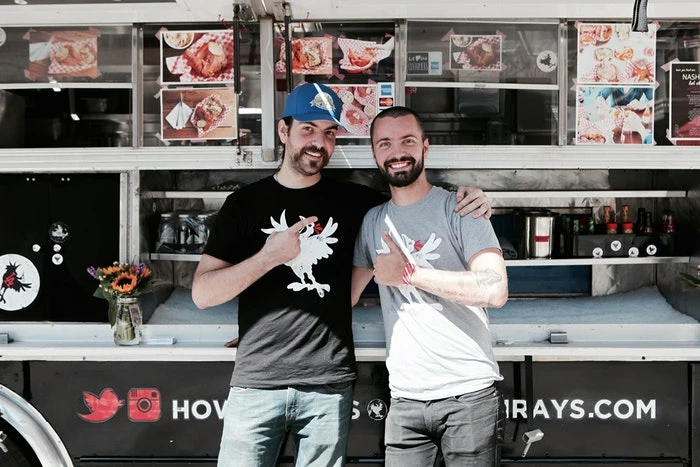
Johnny Zone knows a thing or two about good food. After an impressive 13-year career working for chefs like Gordon Ramsay, the obvious choice might’ve been to open a fine dining restaurant, but Johnny chose to start his own small business instead — a fried chicken food truck in LA.
We couldn’t wait to find out this master chef’s recipe for success!
 Name: Johnny Zone
Business: Howlin’ Ray’s Hot Chicken
Started: June 2015
How did you create your awesome job?
When I was 16, I ate a burger in New Mexico that blew my mind. From that moment on, all I wanted was to be able to cook food like that, so I took a job in a French Bistro — Figaro Bistrot in Los Feliz — instead of going to school.
From there, I continued to work at more refined restaurants. I was part of the original team at Gordon Ramsay at The London Hotel in West Hollywood, where I spent three years in the kitchen and I was the chef de partie when the restaurant was awarded a Michelin star. I’ve appeared on a few TV shows too, including Food Network's The Best Thing I Ever Ate, Cutthroat Kitchen and Beat Bobby Flay, where I was victorious in a taco competition.
Later on in my career, I decided that I wanted to learn about different techniques and cooking cultures, so I flew to Nashville, Tennessee, to cook under Shaun Brock. There, one of the chefs showed me a recipe for hot chicken like nothing I’d ever tasted before. The way the chicken is fried and the Carolina Reaper and Scorpion Pepper sauces they use made it one of the best dishes I’d ever had. I knew I had to bring it back to LA.
That’s how Howlin’ Ray’s was born. It’s a total contrast to the food I’m known for, but there’s a big trend toward chefs going into the quick service industry and providing high-quality food for a smaller cost.
Who was your very first customer?
Our first customer was Mark Weiss, who is now a regular.
We got a bunch of publicity before opening and tons of people were craving Howlin’ Ray’s chicken after reading the press, including Mark. He works in LA as a producer on shows like The Real Housewives of Orange County and eats with us once or twice a week.
When did you know your business was going to work?
I made a name for myself cooking on TV, so when it came to setting up a business, we were lucky enough to have some big investment offers. One guy offered us $1m to start out, but we turned him down.
My wife Amanda and I decided to open the food truck with only our personal savings — we’d spent enough time working for others and making them richer, so decided to do this on our own. There were risks, but we had no doubts. It was just a matter of building the right structures.
Running a food truck is a lot of hard work, but it’s paying off. We’ve got a loyal following on social media and we found a few good spots to park our truck across LA every day, which bring us solid and predictable sales. We’re also taking a ton of bookings for private events as an additional stream of income.
What has been the biggest surprise in starting your own business?
How much it costs! When I was an employee, I thought my employers were making crazy money. I had no idea how much it cost to even open each day, let alone processing payroll and paying for insurance. I knew there’d be hidden costs, but I thought they’d be much lower.
How do you price your menu items?
All successful restaurants run on the same pricing formula. The cost to the consumer is approximately 20-30% food cost, 30% labor cost, 5-10% rent (in our case, the running costs of the food truck) and 20-40% profit.
This works out well for us when operating day-to-day, but we also get booked out for events. Say we’re booked out for a $5k event, but we don’t sell $5k worth of food. The cost of goods will be lower the next day when we go back to normal service.
We’d never alter our pricing structure because keeping our integrity is important to us. The cost of ingredients for a fast food chain might only be 10% of the final sale price, but we only use organic, free-range chicken and locally sourced vegetables. In order to make it affordable, we stick to a cost of around 30% for ingredients.
What does a typical day look like for you?
We don’t have many employees because we’re trying to keep our overhead low, so I do most of the prep work myself. That means waking up early to head to our commercial kitchen where I check the products, prepare what I can and load up the food truck.
Service runs from 12pm to 5pm and we change locations each day to serve different areas of LA. I have a driver who takes the truck to each location and I meet him there to run the service with him.
Afterwards, we take the food truck back to the commissary, which is where we dispose of our waste water and give the truck a deep clean. I’ll also go through our stock to see what I need to order next. Then I’ll head home to try to get some sleep before it starts all over again the next day!
My wife Amanda spends her time focusing on social media, booking locations and processing special orders. She’ll also work on the truck with me from time to time when we have big events.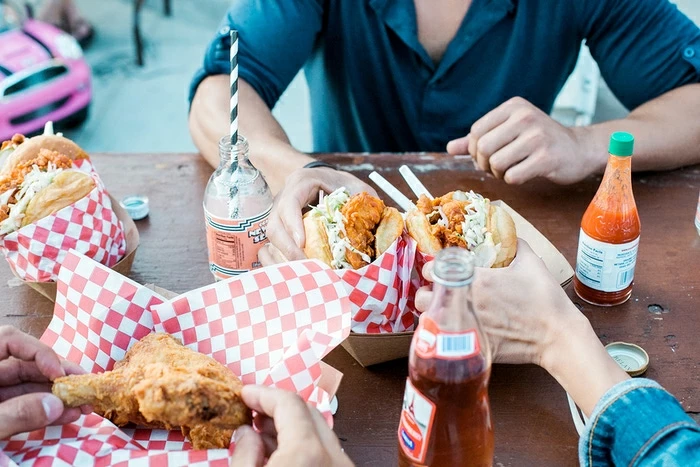
If you could go back in time, what’s the one thing you’d do differently when starting your business?
I want to say hire I'd more staff, but if I’d done that we would have had the extra stress of payroll to deal with when starting out. This month is big for us in terms of recruitment. We’re at a stage where sales are pretty consistent, so we need to get more hands on deck to help the company grow.
Our vision for the future is to open up a brick and mortar restaurant once we’ve found the right location. We’d keep the food truck going because it’s a moving billboard. Howlin’ Ray’s is a very franchisable company, so I’m optimistic about our potential for growth.
What would you like to learn today from a network of other small business owners and self-employed professionals?
I have a specific question for restaurant owners:
With the minimum wage rising in California, what are your thoughts on the tipping system vs. a service charge? Lots of restaurants are moving toward service charge, but we run a tipping system.
I’d like to know if this will be sustainable for my business if we try it.
Can you help Johnny make a decision on using tipping system vs. a service charge?
If, like Johnny, you're tapped into the food industry and you have an experience to share about using the traditional tipping system vs. a service charge, we want to hear your thoughts right here!