


Jewelry Pricing 101 with Etsy Shop Owner Michelle Chang
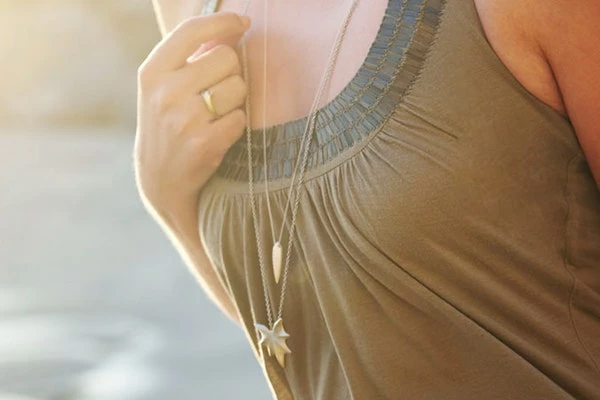
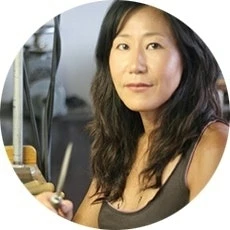
Michelle’s business was almost over before it began when her relationship with her boyfriend — and his distribution network — came to an end. But that wasn’t enough to stop her from achieving her dreams.
Today, Michelle runs a successful jewelry business that she launched all on her own. We asked her to break down the exact formulas she uses to price her items and share her tips for experimenting with pricing when you have items that just aren't selling.

Name: Michelle Chang
Business: Michelle Chang Jewelry
Started: October 2007
How did you create your awesome job?
When I lived in New York City, my boyfriend at the time owned a successful company that designed custom watches, which were sold across the US.
He had a good distribution network already in place, and he wanted to expand his business to include jewelry. He thought I had a good eye for design and asked if I’d start the jewelry section for his company. At the time I was doing illustration work and my schedule was pretty was flexible, so I said yes and started taking some jewelry design classes. But before we could set up the business, we broke up.
I later moved to California and decided to go ahead and set up a jewelry design business on my own. That’s when when I opened Michelle Chang Jewelry on Etsy. Within a year, the shop was doing so well that I could phase out my illustration work and focus solely on the business.
In the process, I decided to establish my own website as well — MichelleChang.com — and now I get a fairly equal number of customers from both.
When did you know your business was going to work?
After that first year, I had enough business on Etsy that I felt confident working strictly as a jewelry designer.
I had a plan to give myself one to three years for it to work, but after only one I felt like I was able to survive on the jewelry business alone. Thankfully, the choice was easy for me — it got to the point where I was too busy with jewelry and didn't have time for two full-time jobs.
How do you price your products?
Before I opened my shop, I did some research online and referenced retail pricing models to figure out how I should price my items.
I determined the material and labor costs for each of my designs, then added them together. To reach a wholesale cost, I multiply that figure by 2 or 2.5. For my retail pricing, I multiply it by 4 or 4.5. I also looked at what other jewelry sites offered, and I made sure not to price my work much higher than competitors in a similar range.
Now, if something is not selling as well as it should, I experiment with pricing. If a piece is not selling, I drop the price a small percentage to see if I sell more. If it still doesn’t sell, I consider the design to be a failure.
I try to see pricing from the customer’s perspective and price according to where they are psychologically if they're looking for something more affordable. For example, if I’ve costed a piece at $56, but I think it’ll sell better if the price is below $50, then I might lower it to $48.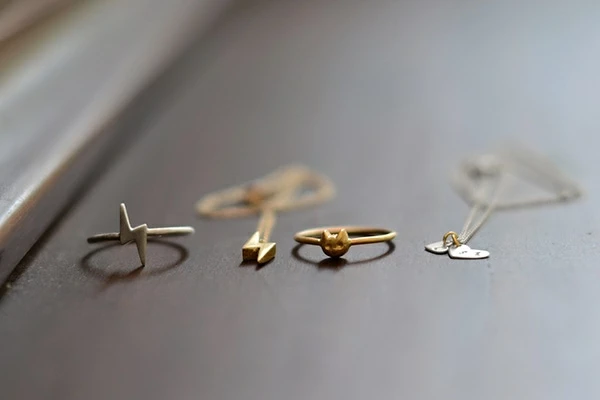
Other times, pricing curtails the design.
Let’s say that I want to manufacture a certain design, but it would increase the retail cost. As the designer and manufacturer, I have to seriously rethink whether I want to pursue that design. I need to make sure the price isn’t going to be too high because this will limit the number of people who can afford to buy it.
"Like the majority of first-time manufacturers, the biggest lesson I learned was not to underprice my worth and my hourly rate."
Over time, I’ve increased the hourly labor rate, which is how much I pay myself. I allow myself to be flexible, though.
Let’s say I can sell a product for $50. With the hourly rate added, the price should be set at $75. If I can sell twice as many units at $50 and less than half at $75, then I’m going to sell it for $50, regardless of my hourly rate. That just makes sense to me.
What does a typical day look like for you?
I’m a late night person naturally and, unfortunately, I haven’t been able to shake that off!
I wake up on the late side — probably when most people are driving to work. Then I spend 1-2 hours doing work in bed, drinking coffee.
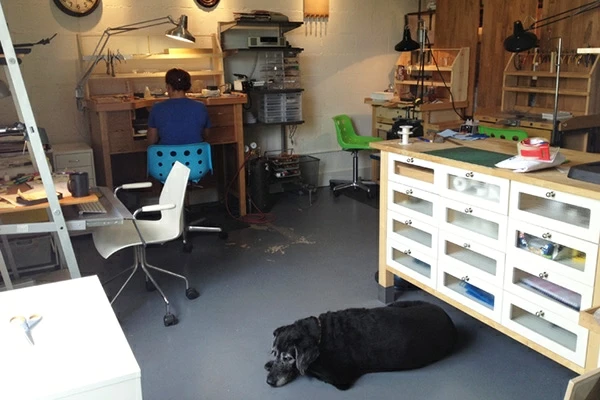
My two assistants come to work at 10am to help me make the jewelry and they're usually in the studio until 6pm. I’m often too busy to do production now.
I take care of everything else during those hours, like answering phone calls and emails, invoicing, pricing, inventory, ordering materials and creating new designs.
What has been the biggest surprise so far after starting your own business?
The biggest surprise was how quickly I gained customers, because initially I didn’t promote my shop on Etsy or anywhere else. I did zero marketing or advertising, and I didn't share anything on social media.
I consider myself a computer novice and I’m not really adept at social media, so I've had to learn how to put time into promoting my work on Facebook and Instagram.
I'm still surprised by how little marketing I've had to do thus far, and I think it's because I produce the right kind of jewelry that appears to a certain customer. I like to think my designs speak for themselves!
If you could go back in time, what’s the one thing you’d do differently when starting your business?
I would’ve spent more time learning different jewelry making skills and I would have opened my business a little later.
Right now, with all my time going into running the business, it’s hard to backtrack and take six weeks of metalsmithing classes at a time.
What would you like to learn today from a network of other small business owners and self-employed professionals?
I’m trying to build my brand and increase my brand recognition right now, and I want to shift my income so that it comes primarily from a wholesale base, rather than individual customers.
I need brand recognition that would appeal to buyers. Does anyone here have helpful PR and marketing advice for how to market my brand to the right people?
Do you have branding tips to share with Michelle?
Let's help Michelle out!
How do you reach out to a new customer base and capture their imagination with your brand? What tactics have been most effective for you?
Share your stories below! :-)