


Julie Gordon White On Building a Powerful Brand Without Using Your Own Name
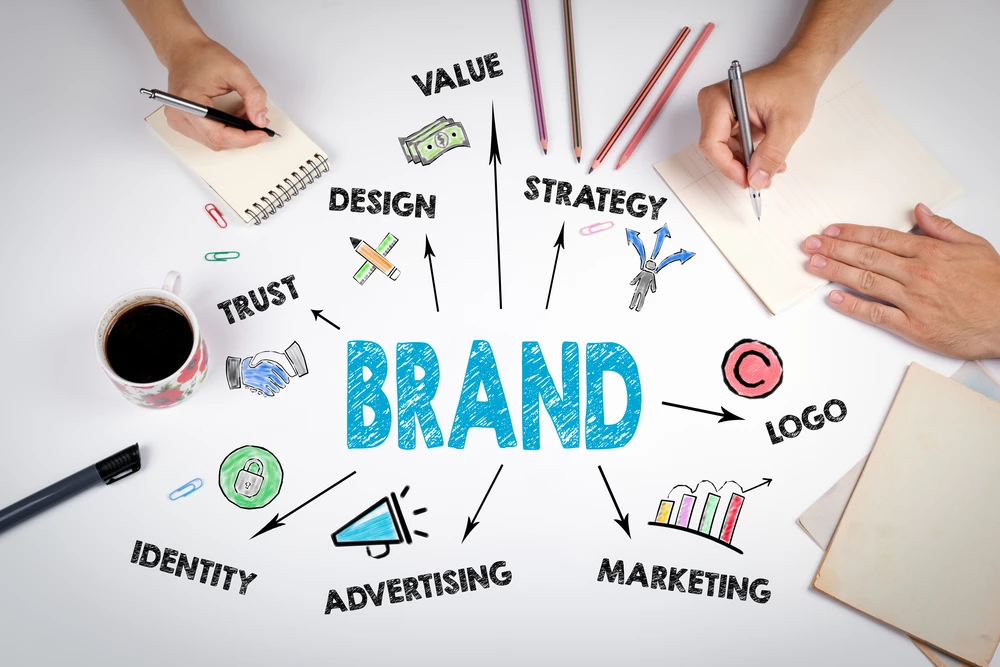
Award-winning business coach, entrepreneur and mentor Julie Gordon White is founder of The WELL, a coaching and training company that helps women build and then sell their business for big bucks. Julie knows first-hand the kind of strategic thinking and decision-making that helps entrepreneurs grow a business into a successful, appealing, sustainable brand (she’s done it herself, several times over!). Here, Julie shares her insights about the importance of authenticity, why small business owners should pay attention to what millennial consumers want and why she recommends never naming a business after yourself (apologies, Oprah!).
Julie, your personality/persona is very much a part of your brand identity. How do you align who you are with the services you offer?
All companies can benefit from the founder having a visible personal brand in addition to the company. We live in a transparent world, and knowing who is behind the brand and what they stand for is now a big part of our buying decisions. Think Sarah Blakely (Spanx), Richard Branson (Virgin) and Barbara Corcoran (founder of The Corcoran Group and Shark Tank investor). They all have billion dollar companies where the product can stand alone but is significantly enhanced by the reputation of the founder.
This happens when the message from the business and the founder (or the founder’s personal brand) are in alignment. When they’re not, the services and products will be perceived as inauthentic. For example, my brand message is that women can and should aspire to grow a million dollar business that is someday sellable. If I start a social media campaign about creating a micro business to help women make an extra $20K a year, that would be inauthentic and confusing!
As you’ve noted, many successful brands are named after their founder. You chose not to put your name in your business. Why?
Unless you are a professional services firm (law, accounting) I do not recommend it! You should definitely own the URL with your name and direct it to your business URL. But for any business to live on after being sold or acquired, it must have its own name. That’s why my company is called The WELL for Women Entrepreneurs and not Julie Gordon White, Inc.
Unless you plan to keep your business forever or are willing to work for a very long time for the person who buys your business, (please say no to both of those options!) ... just don't do it.
We’re having this conversation in part because millennial consumers increasingly support companies that reflect their personal values. How should small businesses respond?
That’s all the more reason for brands to be authentic because transparency is everything! Instead of resisting this shift in priorities, small business owners should embrace it as an opportunity to engage with customers and endear them more than ever to their brand.
One way to do this is to use a dedicated social channel to share a behind-the-scenes look at your business. For example, you might use Facebook for more traditional content marketing and advertising, Instagram for a visual presentation of the business and Snapchat to show your personal world. By leveraging two or three platforms for different purposes, you can connect with super fans in all the places they hang out and let them get to know you on a deeper level. As a result, they may end up trusting you – and buying from you – even more.
While this might seem like a lot of work, social media is here to stay. I say, embrace it and leverage it to grow your client base and bank account to ... you know what I'm going to say ... one million or more!
How can small business owners start building a strong brand identity from day one so they can sell big in the future?
The business identity must be so strong it can remain solid and stable after a change of ownership. The way to accomplish this is to build a "brand partnership" between the company and the founder so they become associated with each other. Also, there must be systems in place so the business is not dependent on the owner in order to generate sales and keep the business afloat.
In my case, I often share on social media images of my signature logoed orange mug. I take one with me when I travel so I can simultaneously showcase and align my personal brand and my business logo in fun places like the Bahamas and Lake Tahoe. In fact, the mugs have taken on a branding life of their own because my clients post their own pictures on social with my mug on their desk. One client even nicknamed it her "Get Sh*t Done Mug!”
Another way to help strengthen your brand identity is to bring in key team members to create additional stability. (Of course, you’ll need to wait until your business is profitable before building a team.) Prospective buyers are more comfortable when a business is stable and successful and has a reliable, valued extended team that will stay in place even if the founder moves on.

Want to weigh in but not yet a QB Community member? Click HERE to sign up in a flash!