


Learning About Licensing the Hard Way. Meet Paper Goods Designer Tiffany Everett
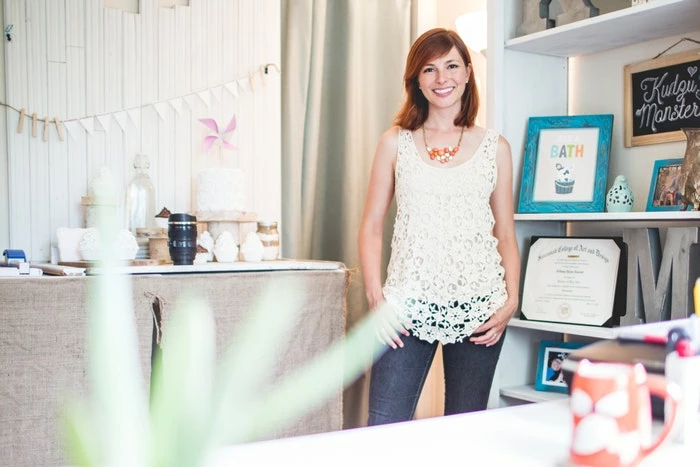
The perennial Kudzu plant isn’t widely loved, but for Tiffany — who named her company after the root — it’s come to stand for a self-sufficient lifestyle.
Tiffany Everett has been making art for others ever since her classmates asked her for portraits of their pets at school, but it wasn’t until she discovered Etsy that she realized she could turn her hobby into a career.
Now that she's getting ready to launch her new website, we asked Tiffany to dish on making the transition from full-time employee to up-and-coming business owner and the biggest branding mistake she made early on.
Name: Tiffany Everett
Business: Kudzu Monster on Etsy
Started: November 2014
Who or what inspired you to create Kudzu Monster?
I started using Etsy in 2009, selling hand-bound journals while I was still in college. I also designed and sold baby mobiles with a friend through Etsy, but Kudzu Monster is my first really successful shop.
I went to art school in Georgia, where I studied illustration. After graduation, I worked for two separate companies designing gift cards, wrapping paper and bags. I enjoyed the work, but it was a long commute from my house and I didn’t really enjoy the city life.
At the end of last year, I hit breaking point. My husband and I decided to sell most of our stuff and move halfway across the county to Colorado. Making the move allowed me to dive head first into my Etsy shop, which I launched officially in November of 2014. I also work as a freelance children’s book illustrator along with running my store to boost my income, and I currently illustrate two or three books a year.
The first products I listed in my new shop were homemade limoncello labels that I’d designed for family as Christmas presents. I thought I might as well give it a shot, and I was amazed when they took off. I got three orders in the first day!
Soon I had requests for custom moonshine, jam and jelly labels too. Now I sell a wide variety of products, but I’m most excited about my party décor packages which include banners, invitations, thank you cards and cupcake wrappers. They’re proving to be really popular.
I sell around six items per day on average, but I’ve sold up to 100 in a single day during the holidays.
When did you know your business was going to work? What was the exact moment?
Two months after leaving my full-time job to pursue running my own Etsy shop, I started to doubt my decision. Sales were slow and I wondered if I had made the right decision.
It was January of 2015 and I knew that Valentine’s Day was coming up. From my past experience in this industry, I knew that this meant a big opportunity for sales, so I spent the whole month making Valentine’s themed products.
Well, between January 14 and February 14, I sold more than 700 items. I always try to capitalize on holidays now!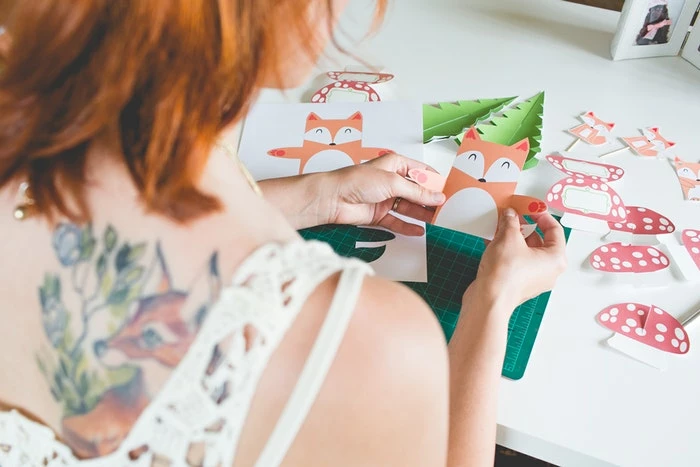
What has been the biggest surprise so far after starting your own business?
How time consuming little tasks can be.
When I tell people what I do, they picture me at home, drawing and creating all day long. I wish that was reality, but it isn’t.
I spend most of my time responding to questions and helping customers who don’t understand how to open a .zip file or how a PDF works. I love my job and wouldn’t trade it for anything, but I’d like to be able to spend more time developing new products rather than doing technical support.
Thankfully, Etsy makes the process of buying my products so easy. I upload a PDF of the designs that I'm selling and as soon as the payment clears, Etsy emails the files to the customer. That leaves me to focus on other areas of my business.
How do you price your products?
Pricing is tricky, but it helps to do a lot of research first. I try to price competitively, but when I start to see an increase in orders, I up my prices ever so slightly. It’s a helpful experiment to see how the price affects demand.
Custom work is the hardest to price because some projects are very easy, whereas others require lots of revisions. For those, I build in a set number of amends in the price and state clearly that extras will be subject to an hourly fee, which I find helps customers to be concise with their feedback.
The biggest thing I’ve learned about pricing is that I can’t please everyone. I want customers who see the value in my products and design services, but I often get asked to lower my prices. I've learned that I have to stick to my guns and politely refuse. I don’t like haggling over my livelihood. 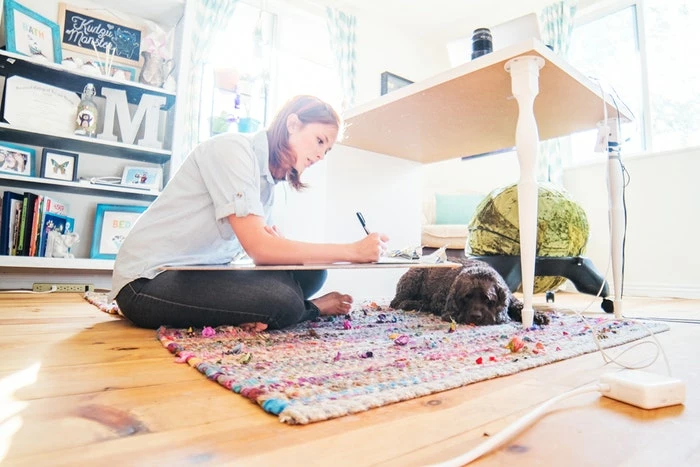
What does a typical day look like for you?
I’m still getting into the groove of working from home — there are so many distractions and no one holds me accountable.
A typical routine involves getting up early and starting with a big breakfast and a few cups of coffee. I’ll see to any small house tasks (like taking out the trash) first thing in the morning so I can minimize distractions throughout the day.
Then I head to my office space. It helps to have a separate room for work because I can focus more easily.
I spend an hour or so responding to emails and customer questions, then make a plan for the day. Recently I’ve started taking advantage of Google Calendar when it comes to staying organized — being able to mark tasks as complete when I’m done is really satisfying.
After that, I jump on Instagram, Facebook and Pinterest where I promote a different product every day. I always start off on social media with the best intentions, but usually end up wasting some time watching funny dog videos or getting distracted in some other way, which is a real struggle!
As soon as the caffeine kicks, in I’ll start with the real work for the day — designing products, creating custom designs and printing items for photographing.
I’ll spend my day like this until it’s time to cook dinner, which I like to spend a lot of time preparing. Living in the mountains means that my husband and I can easily hike and camp, which we do frequently during holidays and on the weekends.
If you could go back in time, what’s the one thing you’d do differently when starting your business?
When I first added my designs to Etsy, an art licensing company contacted me to ask if they could license my work for kids’ nursery prints. It meant a little bit more money for me on the side, so I jumped at the idea.
If I could go back now, I would have never entered into that whole mess. I keep finding my prints in major retail stores without my name on them. It hurts to watch others make a lot of money off my products, while I only get a very small percentage as royalties every now and then.
What would you like to learn today from a network of other small business owners and self-employed professionals?
Right now I’m working on creating my own standalone web store for Kudzu Monster. I’ve bought the URL and I’m in the process of designing the pages, but I don’t know how I’ll drive traffic to it when it’s done.
Promotion is so foreign to me because I’ve relied on Etsy and its build-in traffic for so long. I’m especially interested in having my site and products featured by bloggers, but don’t know where to begin contacting them. 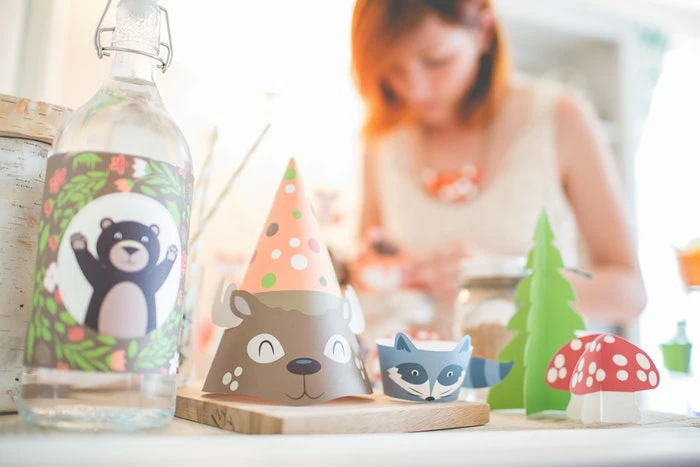
What are your tips for Tiffany when she launches her new website and online shop?Tiffany is getting ready to roll out her new website and online store — and she could use your help!
Do you have experience with getting the word out about a new website? Have you ever reached out to bloggers about featuring your products?
Share your story right here! :-)