


Pricing for Your Target Market: Meet Handmade Furniture Designer Nicole Hodsdon
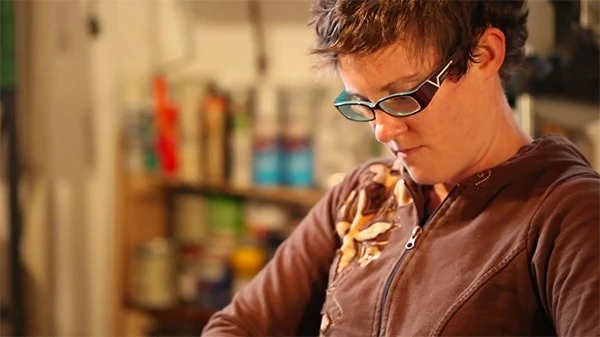
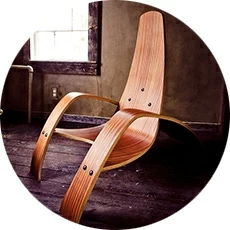
Nicole Hodsdon struck out on her own two years ago after realizing that her bent-plywood creations had a bigger market than just her brother-in-law. As the owner and designer of Ciseal (pronounced ‘suh-seel’ and named after the Irish word for layer), she creates durable, nature-inspired furniture for creative curators. Every single product is made in-house in her tiny basement studio in Michigan.
We chatted with her about the importance of understanding your market when you're pricing your goods – and how exactly you bend plywood by hand.
 Name: Nicole Hodsdon
Business: Ciseal Furniture and Home Goods
Started: 2013
How did you create your awesome job?
After getting a degree in Mechanical Engineering, I majored in product design at The College for Creative Studies. My first job out of college was freelancing in product design, mostly focusing on things like packaging, interior displays and craft design.
At first, I found clients on a word-of-mouth basis, but I started to get tired of working on other people’s ideas instead of my own. I decided I wanted to work on something more personal. In college I'd taken a course on bending plywood and I loved it, so I decided that was as good a starting place as any.
It’s surprisingly simple. I take thin sheets of wood like oak, birch, walnut or sapele, cut them to size and then layer them, putting glue between each pair. Then I shape the wood around a mold and clamp the piece together. Once the glue is dried, which takes some time, the layers hold their shape. I make the molds by designing the form on my computer, on a program like Illustrator. I cut them out and use several pieces to build the exact shape I’m looking for. 
When was the moment you decided to create your own business?
It was actually after a request from my brother-in-law. He was looking for a tablet stand and couldn’t find anything he liked, so I said I’d give it a go. He helped me with the form, so I decided to let him have that one for free.
After that, I decided to have a go at selling on Etsy. I started with just ten tablet stands to test the waters. I was so pleased when people liked them enough to buy them!
When did you realize your business could actually work?
I knew my business could work when I got my first repeat customer. It’s an amazing feeling when people want to buy your products, but it’s even better when they engage with you and buy your products as gifts for friends and family.
What has been the biggest surprise thus far?
When I first started, I kind of expected my company to build itself. I thought that by designing a good-looking website and selling beautiful hand-crafted products, I’d draw in customers without even trying.
In hindsight, it shouldn’t have surprised me that this is not how it works. I quickly realized that getting my name out and my brand was no simple task – I couldn’t rely on word-of-mouth anymore.
"What I’ve learned is that, to create sustainable growth, I need to be proactive. That means reaching out to people I don’t know. A lot."
Whether it’s bloggers, store owners, magazines or tastemakers on Instagram, I need other platforms to make my product more widely visible.
How do you determine your pricing?
Working out my pricing strategy has had a lot to do with defining my market.
At first, I felt like I need to get my prices as low as possible to compete with huge global retailers who sell bent-plywood basics at rock-bottom prices. But I couldn’t compete because of my process – each product takes days to complete, whereas the retailers’ automated process means they can make thousands at a time.
It was only when I realized that it was exactly this slower process that defined my work that I identified my customer base. The people who buy my products come to me because they appreciate the attention to detail and the human hands that craft each piece.
Once I’d taken this step in understanding who my ideal customer was, I structured my pricing to represent the honest story behind the product.
What does your typical day look like from start to finish?
I take it easy in the morning, spending an hour or two drinking coffee, responding to emails and customer queries and eating breakfast.
Then the real work begins. I begin each day in my tiny basement studio working on molding products. It takes around six hours for the glue between the layers of wood to dry, so this has to come first in my day.
After that, I get to work on trimming and sanding the pieces I molded the day before. The next step is to finish the products by hand, let them dry and then add the hardware, like wiring for lamps.
I finish up by boxing up the next day’s orders. Oh, and I always walk my dog Fozzie in the afternoon!
If you could go back in time, what's the one thing you'd do differently?
I would absolutely start with a business partner. My skills lie in the creative side of the business – designing and making – and the admin side of things can be overwhelming.
Even working at this small scale, I find a lot of my time is taken up with marketing, accounting and ordering supplies. I think my business would be growing faster if I had a partner to work on it with, to bounce ideas off and, most importantly, so that we could push each other. 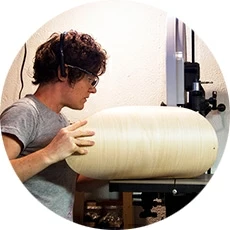
What would you like to learn from a community of other small business owners and self-employed professionals?
My main interest at the moment is scaling my business. I’d like to know how others have grown from ‘solo-preneurs’ to teams of 5 or 20 employees. Is it possible to scale production but also keep everything in-house and handmade?
And on the money side of things, did you rely on revenue as the business grew naturally or did you have to take on loans, or investments? I’m still trying to figure out how this all works!
Let's help Nicole out! What have you learned about scaling a small, handmade business?
If you have an experience to share about what you've learned when it comes to adding new employees to your small business while keeping your product in-house and handmade, we'd love to know your story.
Share with us below! :-)